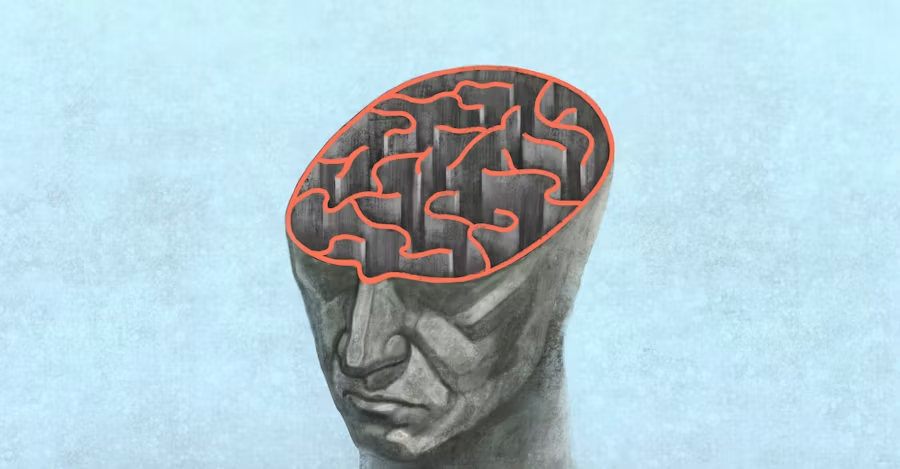
“Nothing means anything except for what you determine it means.”
Mindfulness Is a Survival Skill
Unlock Your Mind:
Building Mindfulness Habits That Stick.
Hey {{contact.first_name}}.
Let’s get real for a second: mindfulness isn’t a luxury.
It’s not a trend, a wellness flex, or something reserved for people who “have time.” It’s a skillset for survival in a world built to distract you.
And if you don’t train your mind, the world will program it for you.
My Struggle With Mindfulness
I always struggled with mindfulness.
As someone who had lived as a victim for so long, I grew really addicted to the pleasures of simply floating through life and not putting much thought or effort into understanding it.
It’s funny if you think about it - we would rather suffer in our own terrible thought processes than try to achieve a different result in life.
For me, things began to click when I decided that I was no longer satisfied with my life, but it took a lot for me to get there.
I had to go through the pain of hating my own life, the person I became, and most importantly, I had to acknowledge that I was the cause of my own suffering.
If you’re going through this right now, know it isn’t some impassable wall in your way.
It’s a door with a flimsy lock; you just have to be aware that it is there and jiggle it enough for it to fall off.
I used to think that everything was happening to me, and I could never find the deeper meanings or reasons to serve me in my efforts to live a better and higher quality of life.
Life Is Meaningless, and That's the Point
The truth that I didn’t understand was this, however: Life is meaningless.
Simply put, nothing means anything except for what you determine it means.
You’re only hurt if you decide something hurts you.
You’re only angry if you decide something angers you.
And most importantly, you’re only at peace when you decide to make peace with things.
It took me many years to understand these concepts and undo my own patterns of thought,
which, by the way, are very easy to cling to.
So you may be asking yourself, Why are our negative thought patterns so easy to adhere to?
Why do I repeat things that hurt me daily to keep hurting me?
How do I break out of this feedback loop from hell?
First, let’s break down WHY it’s so difficult…
Your Brain Is Running Old Code
Your Brain Is Like a Computer, and It’s Running Old Code Your brain is not designed for mindfulness.
It’s designed for efficiency and protection.
Think of it like a computer running scripts in the background.
Every reaction, every mental loop, every overthinking spiral?
That’s automated code: habitual programming designed to keep you alive, not fulfilled.
Neurologically speaking, the brain is a prediction machine.
It leans on past data (experiences, traumas, thoughts) to automate your present behavior.
This is thanks to structures like the basal ganglia (BG), which store habits and patterns, help with decision making, emotional regulation, and determining what you feel rewarded for.
That’s why mindfulness initially feels unnatural. It forces you to break automation.
So, is all of this effort to learn mindfulness worth it?
Does it make sense to take time out of my busy schedule to truly sit here and pay attention to the smaller details of my life?
What the Science Says
Let’s see what the Science Says:
A 2018 meta-analysis published in JAMA Internal Medicine found that mindfulness practices significantly reduce symptoms of anxiety, depression, and pain, with measurable changes in the prefrontal cortex (executive function) and amygdala (emotion regulation).
Translation: Mindfulness literally reshapes your brain to respond better to stress.
According to Harvard research, the average person’s mind wanders 47% of the time, and that wandering is strongly linked to unhappiness.
Additionally, we know that the average person runs on autopilot about 93% of the time, meaning we mostly don’t choose how we interact with life; rather, we are just passively experiencing it.
Data is cool, but what do we do with this information?
Well, action is the key to all success in life, but there are actually steps to action, and it can be broken down into a few phases.
First, you learn how to interrupt your neurological and behavioral patterns.
Next, you add mindfulness factors, and finally, you choose new and enhanced strategies to reinforce the changes you’d like to make.
Breaking the Pattern: State Interrupts
So let’s start here: Breaking the Pattern:
The Power of State Interrupts. When your mind starts spiraling, you need to interrupt the pattern before it spirals into anxiety, procrastination, or impulsive behavior.
I’m not talking about avoiding it.
I’m talking about shocking the system long enough to insert intention.
Pattern Interrupt Tactics You Can Try:
● Cold Exposure (e.g., a cold shower or ice on your neck) sends a signal to your nervous system that forces you into the present moment.
● Name It Out Loud: “I’m spiraling.
I’m not grounded.
I need to reset.” Awareness names the loop.
Naming breaks its grip.
● Body Shock + Breath:
Stand up fast, clap your hands hard,
then take 3 deep belly breaths.
Move → Pause → Re-center.
● Look at Something Green or Blue:
Nature colors soothe the nervous system and regulate cortisol.
It’s subtle, but powerful.
You can’t meditate out of chaos if you’re still clinging to your chaos scripts.
I know this can feel like an uphill battle at times, even for the most successful entrepreneurs.
Understanding behaviors is foreign to most of us, but they’re actually really simple to understand.
You just need the right information.
So check this out: Here’s why it’s…
Why It's So Hard to Be Mindful
So Hard to Be Mindful (and Why You Still Must Try) Behavioral psychology shows us that habits are built through a feedback loop: cue → routine → reward.
Mindfulness disrupts that loop but doesn’t offer instant gratification, so your brain resists it.
Plus, dopamine addiction (from phones, likes, news, distractions) makes stillness feel boring, even painful.
Your brain is wired for stimulation, not reflection.
But that’s the very reason you need to train it.
Stoic philosopher Epictetus said, “No man is free who is not master of himself.” Mindfulness is how you regain mastery.
It’s how you become the cause, not the effect, of your life.
Control of life is an illusion, but controlling how you navigate life is possible.
Maybe you’ve been working on mindfulness for a while, but keep failing.
Why Most People Fail
Let’s normalize the reason most of us will and do fail:
Most People Fail at Mindfulness Because…
● They want to feel better instantly.
But mindfulness is the slow mastery of mental conditioning, not a dopamine hit.
● They confuse awareness with judgment.
Mindfulness isn’t beating yourself up for zoning out.
It’s simply bringing yourself back, over and over again.
● They quit before the breakthrough.
Neuroplasticity takes repetition.
You don’t rewire decades of chaos with one journaling session.
You don’t like capability, you lack time.
Most people overestimate what they can do in a month and underestimate what they can do in a year.
Be reasonable with your expectations for the process of change to take hold.
So, with all of that priming and prepping, let’s get into the final part of this newsletter and the most important piece: the action steps…
Action Steps You Can Do Today
Action Steps You Can Do Today to Build Mindfulness
1.
Set a Mindful Anchor Task Choose one daily habit (brushing your teeth, washing dishes, walking) and do it with full presence.
Zero phone.
Just you and the moment.
2.
Use the 3-Second Breath Reset When emotions rise, inhale for 3, hold for 3, exhale for 3, and repeat 3 times. This stops the stress loop and resets your nervous system.
3.
Journal the Pattern Write down one reactive loop you fall into.
What’s the trigger?
What’s the usual response?
Then write: “What’s a more intentional way I could respond?”
4.
Build the “Do Nothing” Muscle Set a 5-minute timer and do nothing.
No music.
No scrolling.
Just sit with yourself.
(Yes, it’ll feel weird.)
Closing Thoughts
That’s the point.) Well, there you have it, I’ve given you the framework and keys to building the life of your desires.
This isn’t about calm vibes and incense. It’s about reclaiming control.
Because if you don’t run your mind, your mind will run you.
And it will run you straight into exhaustion, reactivity, and regret.
You’re not here to live on autopilot.
You’re here to become the person who responds, not reacts.
Who chooses, not chases.
Who builds a life on purpose, not survival.
If this resonated, let’s talk.
A free 45-minute strategy session. No pitch, just a real conversation about where you are.
Book Your Free Strategy Session